
How to store coffee beans, and why roast date matters
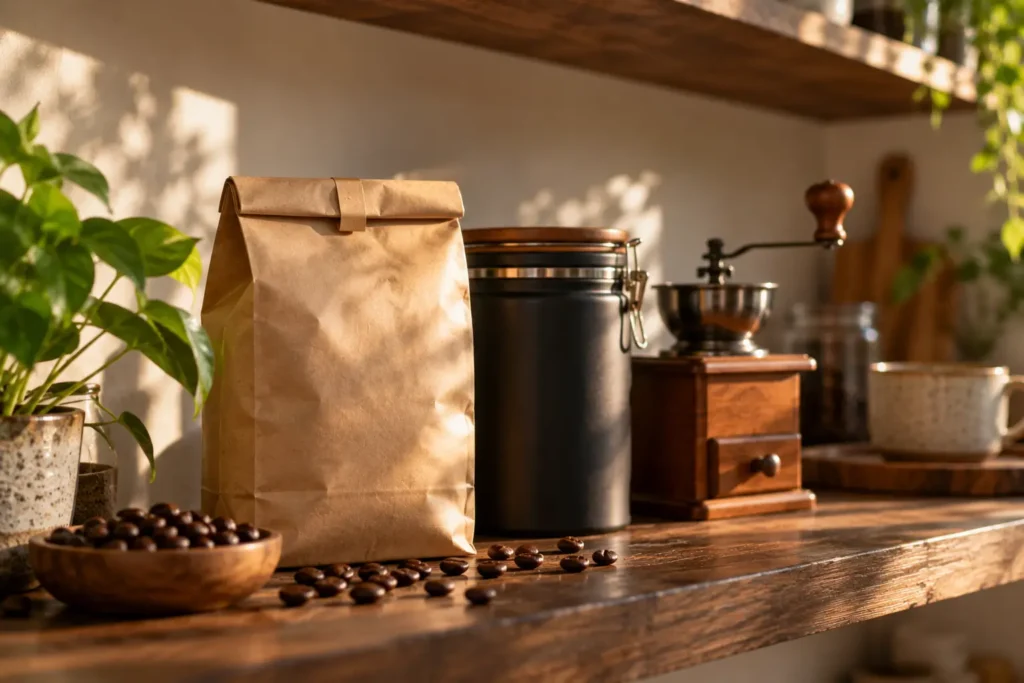
Coffee is a fresh product. Once beans are roasted they start to change, and the best cup is not always the one brewed the day the beans come out of the roaster. Understanding that curve, and a few storage habits, will improve your coffee more than a new gadget.
Why roast date beats best-before
A best-before date tells you when a bag is technically still fine. A roast date tells you where the coffee sits on its flavour curve. Look for bags that print the roast date clearly. If a bag does not, you cannot know how long it has been sitting.
Let it rest
Freshly roasted beans release carbon dioxide for days afterwards. That gas can make filter coffee taste flat and makes espresso shots unstable and fast. A short rest fixes this.
- Filter and pour-over: often best from a few days to a couple of weeks after roasting.
- Espresso: often best after about a week or more of rest.
- Everything: enjoy within a few weeks of the roast date. Flavours fade gradually, not suddenly.
These are guidelines. Trust your own palate over any chart.
Four enemies of fresh coffee
Coffee goes stale when it meets air, light, heat and moisture. So:
- Keep it airtight. Use the bag’s reseal, or an opaque airtight container. Squeeze out extra air before sealing.
- Keep it dark. Light speeds up staling, so avoid clear jars on a sunny counter.
- Keep it cool and dry. A cupboard away from the stove and kettle is ideal. India’s heat and monsoon humidity make this especially important.
- Skip the fridge for everyday beans. Moisture and food smells can get in each time you open the container.
Buy whole, grind fresh
Ground coffee has far more surface area, so it loses aroma much faster than whole beans. If you can, grind just before brewing. A simple hand grinder is a great first upgrade, and it gives you the freedom to change grind size for any brewer.
Buy the right amount
It is better to buy smaller bags more often than one huge bag that goes stale. A subscription is an easy way to do that: beans arrive freshly roasted on a schedule that matches how fast you drink them. If you make two cups a day, a 250 g bag usually lasts a bit under two weeks.
Leave a Reply
You must be logged in to post a comment.