
A tour of Indian coffee regions, from Chikmagalur to the Malabar coast
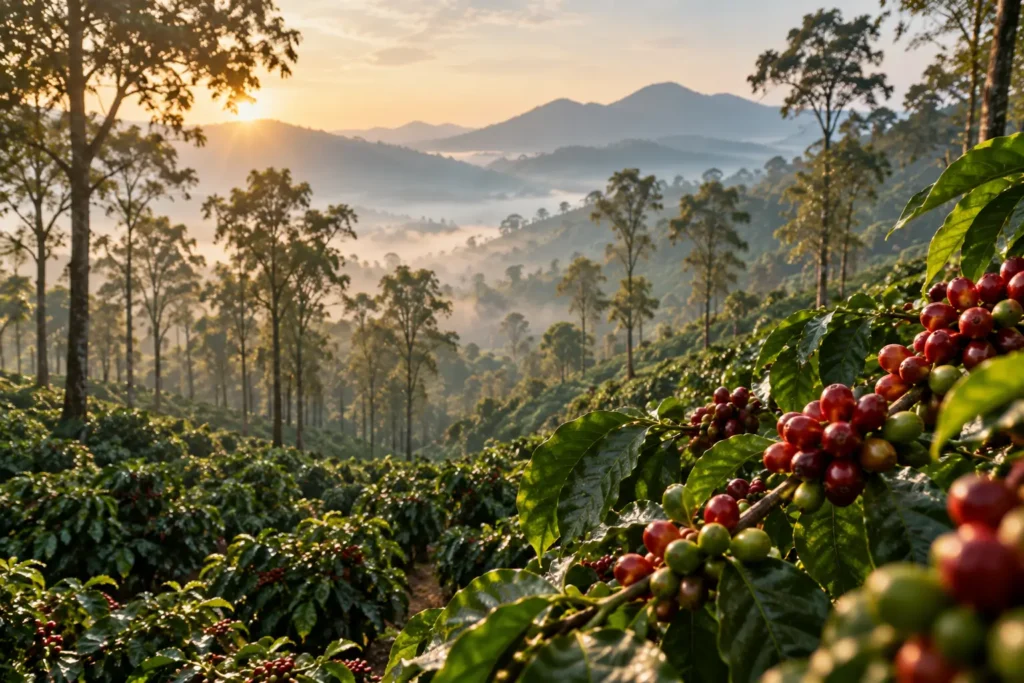
Indian coffee is easy to overlook, yet the country has grown it for centuries in some of the most beautiful hill country anywhere. Most of it is shade-grown, tucked under a canopy of tall native trees alongside pepper vines and cardamom, which is part of why it tastes the way it does.
Where it started: Chikmagalur
Legend says the story began in the 1600s, when a Sufi saint named Baba Budan brought seven beans from Yemen and planted them in the hills of Chikmagalur in Karnataka. Whether or not that is exactly how it happened, the region is still treated as the birthplace of Indian coffee. Expect chocolate, citrus peel and a touch of spice, with a smooth, balanced body.
Coorg
Also in Karnataka, Coorg (Kodagu) is India’s largest coffee-growing district. The coffee is mellow and round with a nutty sweetness and low acidity, which makes it an easy daily cup and a reliable base for espresso blends.
Araku Valley
High in the Eastern Ghats of Andhra Pradesh, Araku is grown by smallholder farming families on small plots. It is a younger name on the specialty map, and the cups tend to be soft and fruity with brown sugar sweetness and a clean finish.
Wayanad
The Kerala hills of Wayanad lean toward Robusta, the hardy cousin of Arabica. Robusta brings a heavier body, more bitterness and plenty of crema, so you will often find it in espresso blends and in filter coffee. Earthy and spiced is the usual description.
The Nilgiris
The Nilgiri hills in Tamil Nadu are known for tea, but coffee grows here too, often at high altitude. Slow ripening in cooler air can give floral, sweet cups with gentle acidity.
Monsoon Malabar
This one is a process more than a place. In the days of sailing ships, beans shipped from the Malabar coast absorbed moisture on the long sea voyage and arrived swollen and pale. Today, green beans are spread in open-sided warehouses and exposed to the damp monsoon winds for several weeks to recreate that effect. The result is a syrupy, low-acid cup with a woody, spicy character that you will not find anywhere else.
How to explore
A simple way to taste the differences is to brew two coffees from different regions the same way, with the same grind and ratio, and note what changes. Every bag we sell names the estate, so you can follow the ones you like.
Leave a Reply
You must be logged in to post a comment.