
Which roast is right for how you brew?
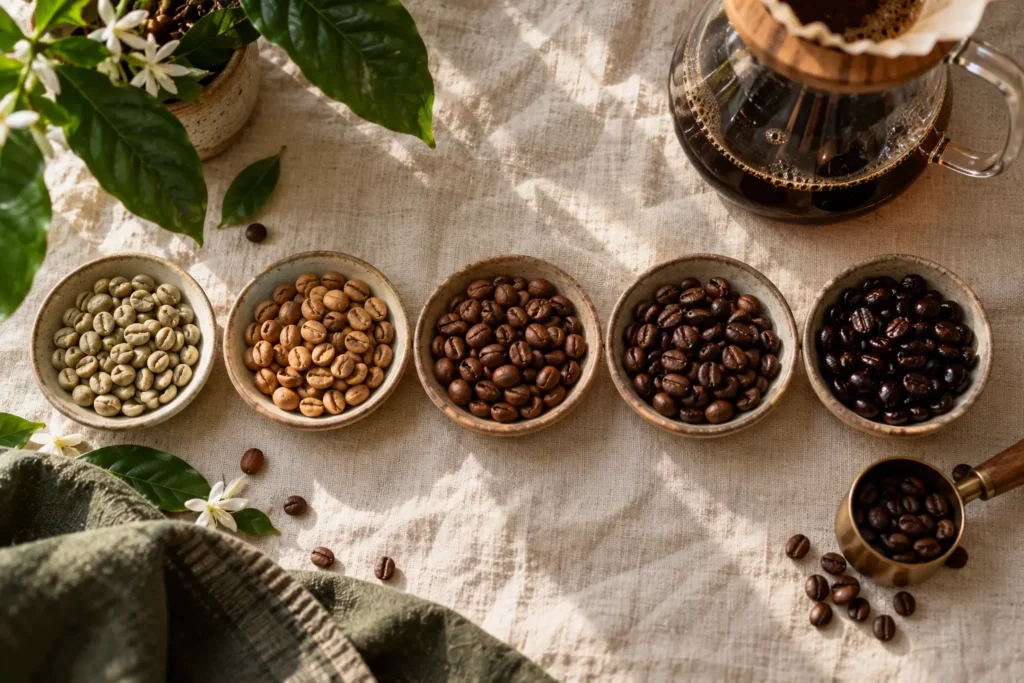
Most people choose coffee by the picture on the bag. A better way is to start with how you brew, because roast level changes the cup more than almost anything else, and different brewers bring out different sides of it.
What roast level actually changes
Beans start green and grassy. The longer they roast, the more their natural acids soften and the more sugars caramelise, then darken.
- Light roasts keep the most of the bean’s origin: bright, fruity, sometimes floral, with a tea-like body.
- Medium roasts balance acidity and sweetness. Think caramel, nuts and a rounded finish.
- Dark roasts trade brightness for weight: chocolate, spice and smoke, with a heavy body and little acidity.
None of these is better. They are just different, and the right one depends on the brewer in your kitchen.
Match the roast to the method
Espresso. Pressure and a short contact time can make light roasts taste sharp. Medium dark and dark roasts give the thick body and crema most people expect, and they hold up well with milk. Start with a ratio of about 1:2, coffee in to espresso out.
Moka pot. Moka pots run hot and fast, so a medium dark roast usually tastes smooth where a light roast can turn harsh. Use a medium-fine grind and never tamp the basket.
Pour-over. The slow, clean flow rewards light and medium roasts, where you can taste the fruit and sweetness of a single estate. A ratio of 1:16 coffee to water and a medium grind is a good starting point.
French press. Full immersion with a metal filter gives a rich, heavy cup. Medium roasts work well here. Go coarse, use about 1:15, and steep for four minutes.
AeroPress. Forgiving and flexible, so light to medium roasts both work. A ratio near 1:14 with a medium-fine grind is a friendly place to start.
Cold brew. Long, cool extraction mutes acidity, so medium and dark roasts taste chocolatey and smooth. Brew a concentrate at about 1:8, steep for 12 to 16 hours in the fridge, then dilute to taste.
If the cup tastes off
Before you change beans, change the grind.
- Sour or thin? The coffee is under-extracted. Grind a little finer or brew a little longer.
- Bitter or dry? It is over-extracted. Grind a little coarser or shorten the brew.
Change one thing at a time and taste each result.
Not sure where to start?
If you only want one bag, a medium roast is the safest all-rounder. If you like to experiment, pick a light and a dark roast from the same estate and brew them side by side. On our shop page you can use the roast scale to see every coffee at the level you want.
Leave a Reply
You must be logged in to post a comment.